
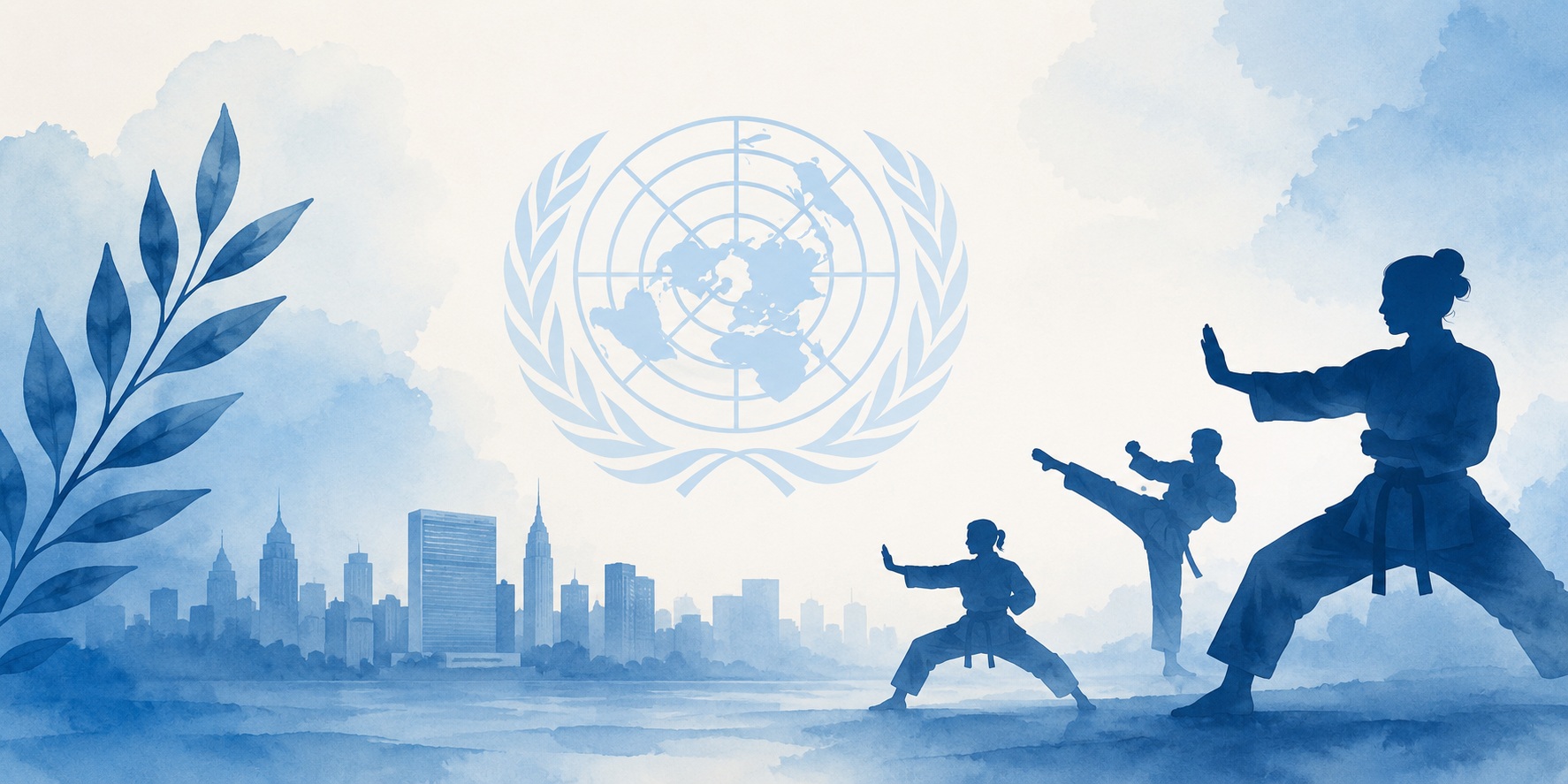
The Martial Arts Coalition for Sustainable Development (MCS), in partnership with the Jadir Taekwondo Association (AJTKD), successfully hosted the official side event “Grassroots to Global: Community-Based Sport Solutions Advancing the SDGs” during the 2026 United Nations High-level Political Forum on Sustainable Development (HLPF).
Held virtually on 16 July, the event presented a global snapshot of community-led SDG implementation through sport, bringing together grassroots organizations from different regions to demonstrate how locally driven initiatives are contributing to sustainable development in diverse contexts.
The HLPF is the United Nations’ central platform for reviewing global progress towards the 2030 Agenda, convening governments, UN agencies, civil society, academia, and other stakeholders to exchange experiences and identify pathways to accelerate sustainable development. Within this context, the side event created an opportunity to showcase how community-based sport initiatives can contribute to safer and more inclusive communities (SDG 11), innovative approaches to youth engagement and education (SDG 9), and stronger partnerships across sectors and borders (SDG 17).
Following opening remarks by Grandmaster Jadir Figueira, President of AJTKD and Co-founder of MCS, Danilo Malafaia, Administrative Director of AJTKD and Co-founder of MCS, set the stage by reflecting on the vital role of grassroots organizations in advancing the Sustainable Development Goals. He also highlighted how initiatives such as One Tree One Movement demonstrate the power of connecting local action through global collaboration, showing how community-led efforts can become part of a shared international movement.
The first session, “Voices from the Field: Community Solutions in Action,” featured presentations from three MCS member organizations working in distinct social and humanitarian contexts:
- Shinsei Academy (United Kingdom), presented by Chris Cluitt, showcased an innovative educational model that integrates martial arts into alternative education for young people experiencing school exclusion.
- Ryu Dan Empowerment Foundation (Trinidad & Tobago), presented by Marva John-Logan, shared its journey of expanding beyond martial arts to address digital inclusion, women’s empowerment, and broader community development.
- Collateral Repair Project (Jordan), presented by Ruba Hattar, highlighted the organization’s holistic approach to supporting refugees and vulnerable host communities through education, psychosocial support, community-building, and sport.
Although each organization operates in a unique context, together they demonstrated how community-based sport can serve as a catalyst for social inclusion, youth development, resilience, and stronger communities.
The event concluded with the panel discussion “From Practice to Policy,” moderated by Inês Crespo, Research Communications and Engagement Lead at the University of Glasgow. Bringing together representatives from the featured organizations alongside Danilo Malafaia, the discussion explored how community-based solutions can inform broader development processes, contribute to the implementation of the Sustainable Development Goals, and help shape more coordinated approaches to sustainable development.
Throughout the discussion, participants emphasized that while communities face different challenges, lasting impact is built on common principles: local leadership, trust, adaptability, and meaningful partnerships. The panel also highlighted the importance of creating more opportunities for grassroots organizations to contribute to international dialogue, ensuring that local experience informs global policy and that global networks strengthen, rather than replace, community-led action.
The side event reflected one of MCS’s founding objectives: creating opportunities for member organizations to exchange knowledge, increase their international visibility, and bring grassroots perspectives into global conversations on sustainable development. By connecting local experiences with international frameworks, the event demonstrated how decentralized, community-led initiatives can contribute to coordinated and impactful progress towards the 2030 Agenda.
As the Coalition continues to grow, MCS remains committed to strengthening collaboration among its members and amplifying the role of community-based sport as a driver of sustainable development worldwide.