
The first coordinated global movement for nature within the martial arts sector brought communities together across four regions.
Throughout June, martial arts organizations across Africa, Asia, Latin America, and the Caribbean came together around a shared commitment to environmental action through One Tree, One Movement, a global campaign launched by the Martial Arts Coalition for Sustainable Development (MCS).
Created in recognition of World Environment Day, celebrated annually on 5 June, the campaign provided a platform for martial arts organizations to engage their communities in environmental activities throughout Environment Month. The activities were united by a shared commitment to raising awareness and encouraging action for nature.
Bringing together organizations working in diverse cultural, geographic, and social contexts, the initiative encouraged participants to engage their communities in activities that promote environmental awareness, stewardship, and action. From tree planting and environmental education to community clean-ups, digital advocacy, and youth-led initiatives, participating organizations demonstrated that martial arts can play a meaningful role in supporting a more sustainable future.
More importantly, the campaign represented something rarely seen within the martial arts sector: a coordinated global effort focused on nature.
Why this movement matters
Climate change and environmental degradation are no longer distant concerns. Around the world, communities are experiencing increasingly severe floods, extreme heat, water scarcity, pollution, biodiversity loss, and other environmental challenges.
Many martial arts organizations operate in communities that are particularly vulnerable to these impacts. This is especially true for organizations working with children, youth, and underserved populations, where environmental challenges can directly affect health, education, safety, and quality of life.
At the same time, environmental sustainability has traditionally received less attention within the martial arts sector than areas such as competition, technical development, youth empowerment, education, or social inclusion. While many organizations already contribute to their communities in meaningful ways, environmental action has often remained outside the scope of their regular activities.
Yet environmental education and community engagement play an essential role in building long-term resilience. They help individuals understand environmental challenges, encourage responsible behavior, strengthen community ownership, and create opportunities for collective action.
Martial arts organizations are uniquely positioned to contribute to these efforts. Through their regular engagement with students, families, coaches, and local communities, they can help foster environmental awareness while encouraging leadership, responsibility, and active citizenship.
One Tree, One Movement was created to demonstrate this potential and to connect organizations around a shared commitment to nature during Environment Month.
The initiative also reflects the broader vision of the Sustainable Development Goals (SDGs), recognizing that environmental sustainability is closely connected to education, health, community development, and social well-being.
A global response
Organizations from multiple countries responded to the campaign, carrying out activities adapted to their local realities, priorities, and environmental challenges.
Rather than prescribing a single activity, the campaign encouraged participants to identify meaningful ways to engage their communities. This flexible approach resulted in a diverse range of initiatives, demonstrating that environmental action can take many forms.
While every activity was different, all participants shared a common goal: encouraging greater awareness, responsibility, and action for nature.
Local action in diverse contexts
Across participating countries, organizations developed initiatives that reflected the needs and opportunities within their own communities.
Tree planting and environmental restoration
In Kenya, the Kenya Karate Federation, in collaboration with Kaizen Martial Arts Club, marked World Environment Day through a community clean-up and tree-planting activity in Mukuru kwa Njenga. The initiative was facilitated by MCS Youth Ambassadors Lucy Mwangi and Valentine Omondi.
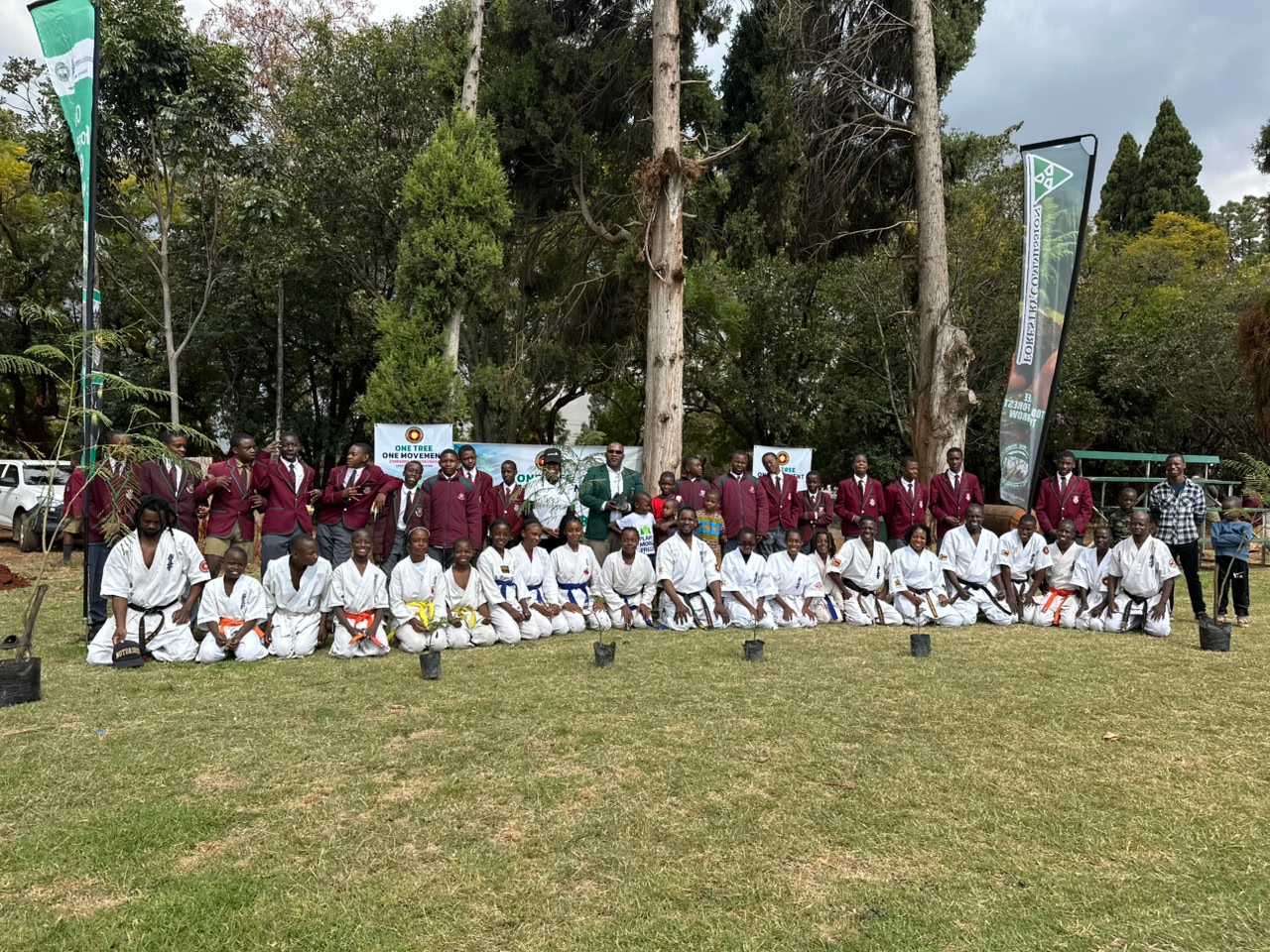
In Zimbabwe, the Zimbabwe So-Kyokushin Karate-Do Organisation partnered with the Forestry Commission to plant trees at Prince Edward High School. Karate practitioners, students, school staff, and environmental experts participated together, promoting environmental stewardship and community engagement. The activity was facilitated by MCS Youth Ambassador Joyce Magaya.
In Nigeria, Omosede Humanitarian Foundation and Hope For Street Children and Vulnerable People Foundation (HOPLE) planted trees within their communities, contributing to local environmental restoration efforts in Benin City and Damaturu. HOPLE’s activity was facilitated by MCS Youth Ambassador Musa Godowoli.
In Rio de Janeiro, Brazil, Projeto Do Morro ao Pódio, David Taekwondo, Projeto Legado, Kicking for Nature, Frossard Team, and Santos Taekwondo engaged their communities through tree planting activities, environmental workshops, community clean-ups, and educational initiatives focused on environmental awareness and local action.
Environmental education and community engagement
In Guatemala, Acciona para el Cambio Social (AXC ONG) engaged school girls in environmental education through workshops, a collaborative mural, and boxing activities that encouraged creativity, participation, and environmental awareness.
In Sri Lanka, SERVE engaged karate students in Moratuwa through environmental awareness and community engagement activities that promoted environmental responsibility and positive action for a greener future. The initiative was facilitated by MCS Youth Ambassador Akila Sewmini.
In India, Red Brigade Trust facilitated discussions on urban water scarcity and its impact on women, helping participants better understand the social dimensions of environmental challenges while mobilizing support for future environmental initiatives.
Community stewardship and civic action
In Pernambuco, Brazil, Instituto Arraial Bom Jesus and Projeto Sambo Novo Mangue, supported by the Brazilian Sambo Confederation (CBSA), involved children in tree planting and mangrove clean-up activities. Alongside their ongoing work in sport and social inclusion, both projects used environmental stewardship as a way to encourage responsibility, community engagement, and care for local ecosystems.
In Mumbai, India, Ippon Youth Martial Arts and Sports Foundation organized a community clean-up activity that encouraged local participation in environmental stewardship.
In Mozambique, Moz Tang Soo Do combined martial arts demonstrations with a community clean-up initiative in Xai-Xai, encouraging residents to maintain healthy surroundings while highlighting the role of martial arts in promoting responsible citizenship.
In Trinidad and Tobago, Ryu Dan Empowerment Foundation organized a nature hike and community park beautification activity led by youth leaders and dojo members. The initiative promoted environmental awareness, appreciation for nature, community pride, and active citizenship. The activity was facilitated by MCS Youth Ambassador Shantel Licorish.
Digital advocacy and awareness
Environmental action also extended beyond in-person activities.
In Kenya, Kwale Tong-il Moo Do promoted environmental awareness through online advocacy initiatives designed to encourage reflection and engagement around environmental issues.
In the Philippines, Arena Fitness Dojo connected martial arts and environmental action through a self-defense and environmental awareness workshop for young girls while also launching a digital campaign called Move for Nature. Through the campaign, students and coaches were encouraged to train outdoors and advocate for the protection of natural spaces. The initiative was facilitated by MCS Youth Ambassador Shaina Liwanag.
These activities demonstrated how digital platforms can help extend environmental messages beyond local communities and engage broader audiences.
The role of youth leadership
Youth leadership was a central component of the campaign.
MCS Youth Ambassadors contributed not only by promoting the initiative but also by helping organize activities, mobilize participants, facilitate partnerships, and encourage environmental engagement within their communities.
Through their leadership, the campaign reached new audiences and strengthened local participation across multiple countries.
Their contributions highlight the important role young people can play in advancing environmental awareness and community action while supporting the broader objectives of sustainable development.
What this means for the martial arts sector
The significance of One Tree, One Movement extends beyond the individual activities carried out during Environment Month.
The campaign demonstrated that martial arts organizations can contribute to environmental sustainability in ways that reflect their own communities, resources, and priorities. Environmental action within the martial arts sector does not need to follow a single model. It can take the form of education, advocacy, restoration, community engagement, youth leadership, or direct environmental action.
By bringing together organizations from different countries and cultures around a shared commitment to nature, the initiative also demonstrated the value of collaboration across the global martial arts community.
As environmental challenges continue to affect communities worldwide, including those served by martial arts organizations, opportunities for collective action become increasingly important.
One Tree, One Movement provided a platform to showcase how martial arts organizations can contribute to environmental sustainability while continuing their broader work in education, inclusion, youth development, and community empowerment.
In doing so, it highlighted the growing role that the martial arts sector can play in advancing the Sustainable Development Goals and supporting positive change at both local and global levels.