
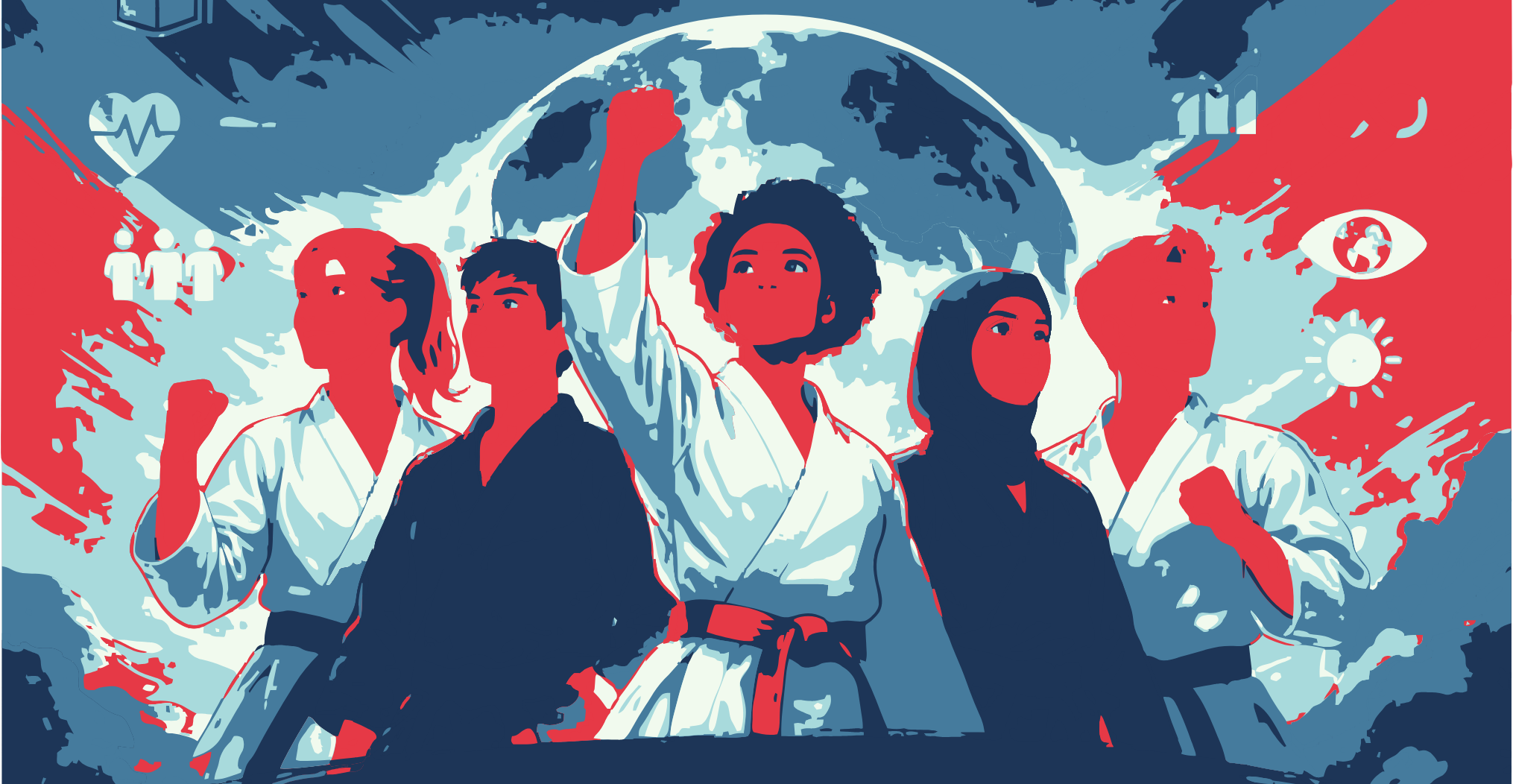
At the United Nations ECOSOC Youth Forum, the side event “Martial Arts for Sustainable Development: By Youth and For Youth — Community Action for the SDGs” brought together grassroots organizations, international partners, and young leaders to examine how martial arts-based initiatives are contributing to the Sustainable Development Goals (SDGs).
Co-organized by the Jadir Taekwondo Association (AJTKD) and the Martial Arts Coalition for Sustainable Development (MCS), the session provided a space to highlight existing work taking place across different regions and to connect local initiatives with broader global discussions.
Grounding the discussion in community realities
The event opened with remarks from Jadir Figueira, founder of AJTKD and co-founder of MCS, who emphasized that many effective responses to global challenges are already present within communities. Drawing on decades of experience in sport and social initiatives, he highlighted the importance of recognizing, strengthening, and investing in these existing structures.
This perspective set the tone for the session, positioning martial arts as a platform embedded within communities, capable of delivering long-term engagement and impact.
Danilo Malafaia followed with a global overview, situating these initiatives within the broader context of the 2030 Agenda. He pointed to a growing ecosystem of community-based organizations that integrate martial arts with education, social inclusion, and community development, while noting that many of these efforts remain underrepresented in global frameworks.
Showcasing grassroots initiatives across regions
A central part of the event focused on presentations from four organizations operating in different parts of the world:
- Acciona para el Cambio Social – AXC ONG (Guatemala)
- Arena Fitness Dojo (Philippines)
- SOMA Association (Spain)
- Wushu Sport Association (Brazil)
These organizations shared how martial arts programmes are being used to address local challenges, from expanding access to inclusive physical activity to supporting social-emotional development and strengthening community engagement.
Despite differences in context, their approaches reflected common characteristics: strong local roots, long-term commitment, and the ability to engage young people consistently through structured activities.
Panel discussion: youth, sport, and development
The panel discussion, moderated by Inês Crespo, Head of Marketing at the Jadir Taekwondo Association, brought together:
- Danilo Malafaia, Co-founder, Martial Arts Coalition for Sustainable Development
- Kateryna Biloruska, Founder, Kateryna Biloruska Foundation
- Shelly Lee, Director of Programmes, Boxing is Love
The conversation explored how martial arts can support youth engagement in sustainable development, including pathways from participation to leadership within community-based programmes.
Across different regions, panelists pointed to similar dynamics: young people entering programmes as participants and gradually taking on responsibilities, leading activities, and contributing to initiatives within their communities.
The discussion also addressed ongoing challenges. While these initiatives are active and often impactful at the local level, they remain less visible within global development discussions. This affects access to funding, partnerships, and opportunities to scale their work.
Launching the MCS Youth Ambassadors Programme
A key moment of the event was the launch of the MCS Youth Ambassadors Programme, presented by Danilo Malafaia.
The programme brings together 20 young leaders selected from over 60 applicants worldwide. It focuses on supporting youth-led initiatives, strengthening connections across regions, and increasing the visibility of their work through the MCS global platform.
As part of the launch, three youth ambassadors addressed the audience:
- Raghad Saleh (Collateral Repair Project, Jordan)
- Lucy Mwangi (Kaizen Martial Arts Club, Kenya)
- Shantel Licorish (Ryu Dan Empowerment Foundation, Trinidad and Tobago)
Their contributions reflected the diversity of contexts in which martial arts are being used and the growing role of young people in leading initiatives at the community level.
From local action to a connected ecosystem
The event highlighted a broader shift: across different regions, similar models are emerging that combine martial arts with education, social inclusion, and community-based action.
At the same time, many of these efforts remain fragmented. Strengthening connections between organizations, increasing visibility, and expanding access to partnerships and funding are key steps in supporting their continued development.
Through its work, MCS is contributing to building a more connected global ecosystem, linking grassroots initiatives and positioning them within the wider conversation on sustainable development.
Looking ahead
The discussions at the UN ECOSOC Youth Forum reinforced the relevance of community-based approaches in advancing the SDGs. Martial arts programmes continue to provide accessible, structured environments where young people can develop skills, take on responsibilities, and contribute to their communities.
As this work continues, the focus remains on supporting existing initiatives, strengthening collaboration across regions, and ensuring that these efforts are more visible within global frameworks.